News
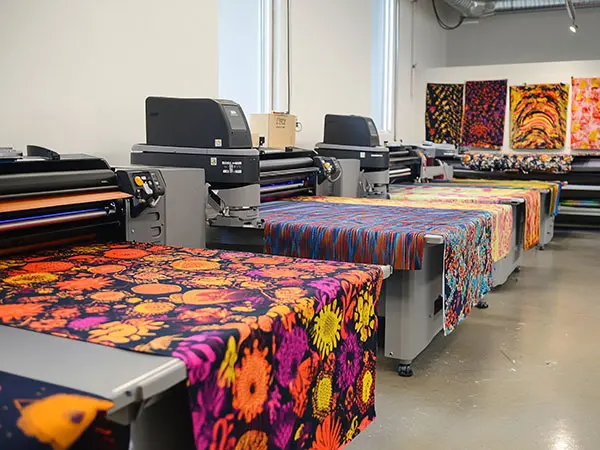
From blurred patterns to precise color reproduction, home textile printing technology is reshaping the aesthetics of sleep. This article compares the core differences between traditional and digital printing, explains why Binyin Group's French-style bedding series insists on using digital printing, and the practical value this technology brings to consumers.
Precision Showdown: Technological Breakthrough in 0.1mm Detail Reproduction
Traditional printing (such as roller printing and screen printing) is limited by the plate-making process, with pattern precision typically exceeding 1mm, easily blurring fine textures. Digital printing, on the other hand, utilizes high-precision printheads that can spray thousands of ink dots per inch, achieving 0.1mm-level detail reproduction. This is the key to the clear veins of bodhi leaves in paisley patterns and the 3-5 color gradients of hydrangeas. Binyin Group laboratory tests show that digital printing achieves pattern positioning errors of less than 0.5mm, while traditional printing can reach errors of 2-3mm, resulting in reduced pattern symmetry. For the complex geometric nesting designs found in French patterns, digital printing perfectly reproduces the smoothness of lines, avoiding the "misalignment" issues associated with traditional techniques. Environmental Advantages: Upgrading from High Pollution to Zero Emissions
Traditional printing requires large amounts of water and slurry, consuming over 200 tons per ton of fabric, and generating wastewater containing heavy metals and hazardous chemicals. Digital printing uses water-based, environmentally friendly inks, eliminates the need for platemaking, consumes only one-tenth the water of traditional processes, and reduces wastewater discharge by over 90%. Binyin Group uses German-imported dyes and chemicals that are OEKO-TEX® certified and free of harmful substances such as formaldehyde and azo compounds. The printing process also produces no exhaust emissions. For health-conscious consumers, especially children and those with sensitive skin, digitally printed bedding reduces the risk of skin irritation and meets the environmental needs of modern homes.
Flexibility and Innovation: Small-Batch Customization and Rapid Iteration
Traditional printing suffers from high platemaking costs, with each set costing tens of thousands of yuan. Modifications to the pattern require re-platemaking, making small-batch production difficult. Digital printing eliminates the need for platemaking; patterns can be modified directly on a computer. From design finalization to production, production takes only 3-5 days, compared to 2-3 weeks with traditional methods. This enables Binyin Group to quickly respond to market trends, such as launching limited-edition patterns based on the season or customizing regional patterns for cross-border e-commerce platforms (such as a tropical flower series for the Southeast Asian market). Furthermore, digital printing allows for personalized customization, allowing consumers to upload photos and have their home images printed on bedding, creating a personalized expression of their sleep space—a key competitive advantage for high-end home textile brands.
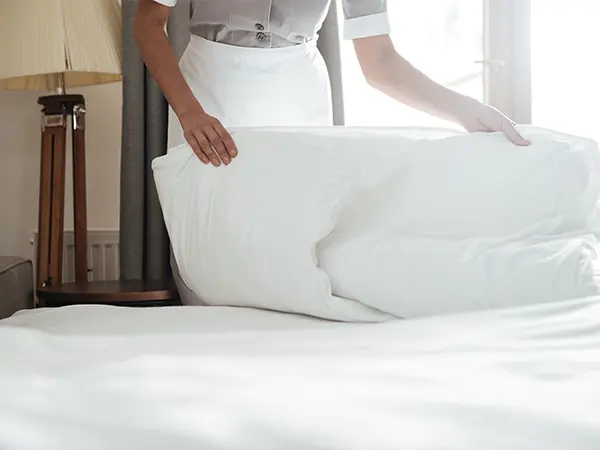
High-quality home textiles require expert care to maintain optimal condition. This article, based on data from Binyin Group's fabric care laboratory, provides detailed professional tips for washing, drying, and storing common home textiles such as cotton, silk, and polyester, helping you keep your bedding looking new for years to come.
Pure Cotton Fabrics: Gentle Washing to Prevent Shrinkage
Pure cotton bedding is known for its comfort and breathability, but it is susceptible to shrinkage and deformation. Important washing tips: Keep the water temperature below 30°C, use a neutral laundry detergent (pH 6-8), and avoid detergents containing fluorescent agents. For Xinjiang long-staple cotton products, such as the Endless Summer 80s set, wash on the gentle cycle for no more than 30 minutes. Experimental data shows that pure cotton fabrics may shrink 3%-5% during the first wash. After drying, ironing at a low temperature (below 110°C) can restore their flatness. Avoid direct sunlight when drying, and dry on the inside out to minimize fading. Dry thoroughly before storage, and apply a moisture-proofing agent when folding to prevent mildew. Silk and blended fabrics: Carefully maintain luster.
Bedding containing silk (such as the silk-bound paisley quilt) requires extra care. We recommend hand washing or using the "Silk setting" with a dedicated silk detergent, keeping the water temperature below 25°C, and avoiding vigorous rubbing and wringing. Silk fibers are less resistant to light, and prolonged exposure to the sun can cause them to become brittle. The best way to air dry is in a cool, well-ventilated area. Blended fabrics (such as cotton and polyester) require tailored care based on the composition. Fabrics with a cotton content exceeding 50% should be machine washed as described for pure cotton. Fabrics with a high percentage of polyester can be machine washed, but the speed should be controlled to prevent pilling.
Fabrics with special craftsmanship: Targeted care should be used to avoid damage.
Digitally printed bedding should not be soaked for extended periods to prevent the pattern from fading. While German-imported dyes are wash-resistant, they should still be washed separately from darker colors to prevent color transfer. Satin fabrics, due to their satin weave, are prone to snagging. Before washing, check the washing machine for sharp objects and avoid contact with rough surfaces during storage. Avoid using bleach on anti-mite and antibacterial products (such as the upgraded Paisley quilt) to prevent the antibacterial coating from damaging and affecting its effectiveness. Following these tips can extend the life of your home textiles by 2-3 years, ensuring optimal user experience.
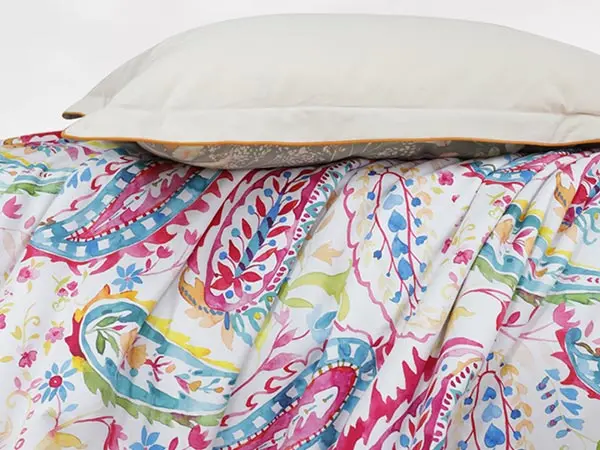
From the Persian "Tree of Life" to the gardens of the Left Bank in Paris, French patterns hold a thousand-year history of cultural exchange. This article follows the design team of Binyin Group to explore how paisley and hydrangea patterns transcend geography to become inspiration for modern home textile design.
Paisley: A Scroll Code Through the Millennia
The origins of the Paisley pattern can be traced back to the Persian Empire in the 5th century BC. Originally based on the bodhi leaf, it symbolized "life and eternity" and was introduced to India, Scotland, and other regions through trade along the Silk Road. In the 19th century, the Scottish town of Paisley refined it into a swirling pattern, becoming a royal motif used by the British royal family. Binyin Group designer Ms. Li explained, "When designing the Paisley summer quilt, we retained the traditional pattern's symmetrical aesthetic, but adjusted the swirl's arc to the golden ratio of 135 degrees to better align with the visual balance of modern homes." Today, the pattern is frequently used by luxury brands such as Dior and Gucci. Digital printing is used in bedding to achieve multi-color gradients, breaking the color limitations of traditional weaving. Hydrangea: The Poetics of Color in French Gardening
Introduced to Europe by the Dutch East India Company in the 17th century, hydrangeas, with their rich colors and vibrant blooms, became a signature flower in the gardens of French aristocrats. Impressionist painter Claude Monet planted hundreds of hydrangea varieties in his Giverny gardens. The interplay of light and shadow in his paintings inspired the design of Binyin Group's Endless Summer collection. "The beauty of French hydrangeas lies in their natural blending of colors. We employed a 'watercolor layered printing' technique to create a gradient of 3-5 colors on each petal, recreating the translucence of the flower in sunlight," explained the design team. Unlike the realistic style of Chinese florals, French hydrangea patterns emphasize emotional expression, often using soft tones like lavender and pale blue to create a romantic atmosphere. Three Principles for Modernizing Pattern Translation
Binyin Group has developed practical experience in pattern innovation: first, "extracting cultural symbols," such as extracting geometric lines from hydrangea patterns; second, "color adaptation," shifting highly saturated traditional colors to less saturated Morandi tones, more suitable for bedrooms; and third, "innovative craftsmanship," combining jacquard patterns with prints to create a three-dimensional feel for flat patterns. These principles not only revitalize ancient patterns but also make products popular with European and American consumers on cross-border platforms like Amazon and Coupang, propelling "Binzhou Smart Manufacturing" to the global market.

The concept of "high-count cotton bedding" is constantly emerging in the market, but consumers often find it difficult to distinguish authenticity. This article, drawing on data from Binyin Group's fabric laboratory, analyzes the core differences between 60s and 80s high-count cotton from the perspectives of fiber, craftsmanship, and testing, helping you develop a discerning eye.
Fiber length determines fundamental quality.
The "count" of high-count cotton refers to the length of yarn produced from one pound of cotton. The higher the count, the finer the yarn, and the higher the cotton quality requirements. Xinjiang Aksu's long-staple cotton fibers generally range from 33-38mm in length, making it an ideal raw material for high-count cotton. 60s cotton typically uses 33-35mm fibers, while 80s requires extra-long fibers of 36mm or longer. Longer fibers improve the fabric's wrinkle resistance and abrasion resistance. Consumers can identify high-count cotton by burning it: high-quality high-count cotton produces grayish-white ash without lumps; inferior cotton produces black ash with a pungent odor. Weaving Techniques Affect Tactile Experience
The main difference in weaving techniques between 60s and 80s bedding lies in warp and weft density. 60s bedding typically has a warp and weft density of 90×88, while 80s can reach 128×68. This results in a denser yarn arrangement and a more delicate feel. Binyin Group laboratory tests show that the coefficient of friction of 80s fabric is 15% lower than that of 60s, significantly improving skin smoothness. Furthermore, high-count cotton requires high-density weaving to prevent pilling. High-quality 80s bedding utilizes a "double-ply weaving" process, where two fine yarns are twisted together to enhance fabric strength.
Avoid consumer traps by using testing standards.
When purchasing, check the "Implementation Standards" on the product care label. High-quality high-count cotton bedding should comply with the GB/T 22844-2009 "Matching Bedding" standard and include specific information such as the thread count and cotton content. Be wary of the "false count" trap: Some vendors label "30s two-ply" yarn as "60s." This can be verified by examining a microscopic image of the yarn's cross-section. True 80s yarn has a diameter of approximately 0.01mm, thinner than a human hair. It's recommended to choose brands with proven supply chain traceability, such as Binyin Group, whose high-count cotton products can be traced back to cooperative cotton fields in Aksu, Xinjiang, ensuring the authenticity of the raw materials.
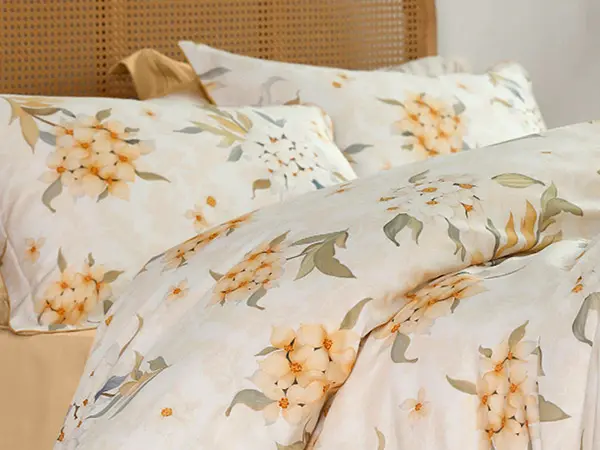
Following the critically acclaimed Paisley Summer, Joy Home Textiles, a subsidiary of Shandong Binzhou Printing and Dyeing Group, has launched a new blockbuster product: the Endless Summer 80s French Print Set. Based on 80s long-staple Xinjiang cotton, this collection incorporates the aesthetics of French hydrangea gardens. Pre-orders exceeded 1,000 units on the first day of pre-sale, offering consumers a sleep solution that combines comfort with artistic flair.
The Endless Summer collection draws inspiration from the hydrangea gardens of Paris's Left Bank. The design team deeply researched the essence of French horticultural art, incorporating the colors and shadows of Impressionist paintings into the bedding design. Each hydrangea pattern is digitally printed to replicate hand-painted brushstrokes, creating a rich, layered visual effect with a blend of low-saturation colors like rose red, lavender, and creamy white. "French hydrangeas are more than just flowers; they are a symbol of a lifestyle aesthetic. We hope to bring the romantic charm of Paris to our homes through our bedding," said Design Director Ms. Wang. This series is crafted from 100% long-staple cotton from Aksu, Xinjiang, using a high-density 80-thread count weaving process. The warp and weft density of the fabric reaches 128 x 68, making it 35% finer than standard 60-thread count bedding. Thanks to southern Xinjiang's abundant 16 hours of sunlight daily, the cotton fibers reach over 38mm in length, giving the fabric a silky sheen and a durable texture that remains soft and breathable even after repeated washes. Furthermore, the products utilize dyes and chemicals imported from Germany and are OEKO-TEX® certified, ensuring formaldehyde-free and odor-free, making them safe for those with sensitive skin.
Endless Summer's 80s French-printed set is now available in over 300 offline stores nationwide. The online flagship store is also offering a "Share your order and get a free hydrangea seed" promotion. Consumers can also use the brand's VR showroom to preview how the bedding will look with different home styles.
Latest Post
Shandong Binzhou Printing and Dyeing Group Co., Ltd.
Through continuous innovation and improved services, we provide home textile products that meet the needs of global consumers, improve the quality of life of families around the world, and promote the sustainable development of the home textile industry.

Shandong Binzhou Printing and Dyeing Group Co., Ltd., founded in 1976, is the only state-owned textile printing and dyeing enterprise in Binzhou City, and has been deeply involved in the industry for nearly half a century.
Copyright @ 2025 Shandong Binzhou Printing and Dyeing Group Co., Ltd. All Rights Reserved, Powered By Easybiz.